
On: August 10, 2026
Advanced Filler Training for Healthcare Providers
Advanced dermal filler training at Coastal Aesthetic Training Institute builds on basic injection skills through hands-on, small-group instruction—fewer than 10 participants per class—covering complex techniques for RNs, NP
Essential Program Details and Enrollment Information
- Coastal Aesthetic Training Institute offers advanced dermal filler training in Mystic, Connecticut for licensed healthcare professionals.
- Advanced Botox and Dermal Fillers Level II course provides 8.0 AMA PRA Category 1 Credits for CME requirements.
- Training programs serve nurses, physicians, physician assistants, nurse practitioners, and dentists seeking to elevate injection techniques.
- Pricing varies by package; contact the brand directly for current offerings and enrollment details.
Why Does Advanced Filler Training Matter Now?
Injection volume is surging. Providers performed an estimated 3.4 million soft tissue filler treatments across the United States, and that figure keeps climbing year over year. Every one of those procedures represents a patient trusting a provider’s hands, technique, and judgment. If your skills stall while demand rises, someone else captures the patients you’re leaving behind.
That competitive pressure isn’t theoretical. Demand for skin care specialists is projected to grow a notable share in the coming years, which means more providers entering the injectable space and competing for the same client base. cite-1 Standing still is a losing strategy in a field this crowded.
What separates advanced injectors from average ones?
Precision, safety, and anatomical mastery now define competent practice rather than distinguish exceptional practice. Advanced filler training for healthcare providers builds exactly that foundation, moving you past basic technique into complex layering, correction, and combination approaches. Without it, you’re limited to entry-level results while your competitors offer more.
Is it risky to wait before upgrading your skills?
Yes. Aesthetic medicine evolves quickly, and providers who delay skill advancement risk falling behind as techniques, products, and patient expectations shift. cite-2 Practice owners deciding on training investment face the same exposure: undertrained staff limits the procedures you can safely offer and caps your revenue ceiling.
Consider what’s at stake:
- Patient safety — anatomical precision reduces complication risk in high-density facial zones.
- Practice growth — broader technique range means more services, more bookings, more retained clients.
- Professional credibility — advanced competency signals expertise that basic-level training simply can’t match.
The window for staying competitive narrows every year filler demand grows.
What Does Advanced Technique Training Cover?
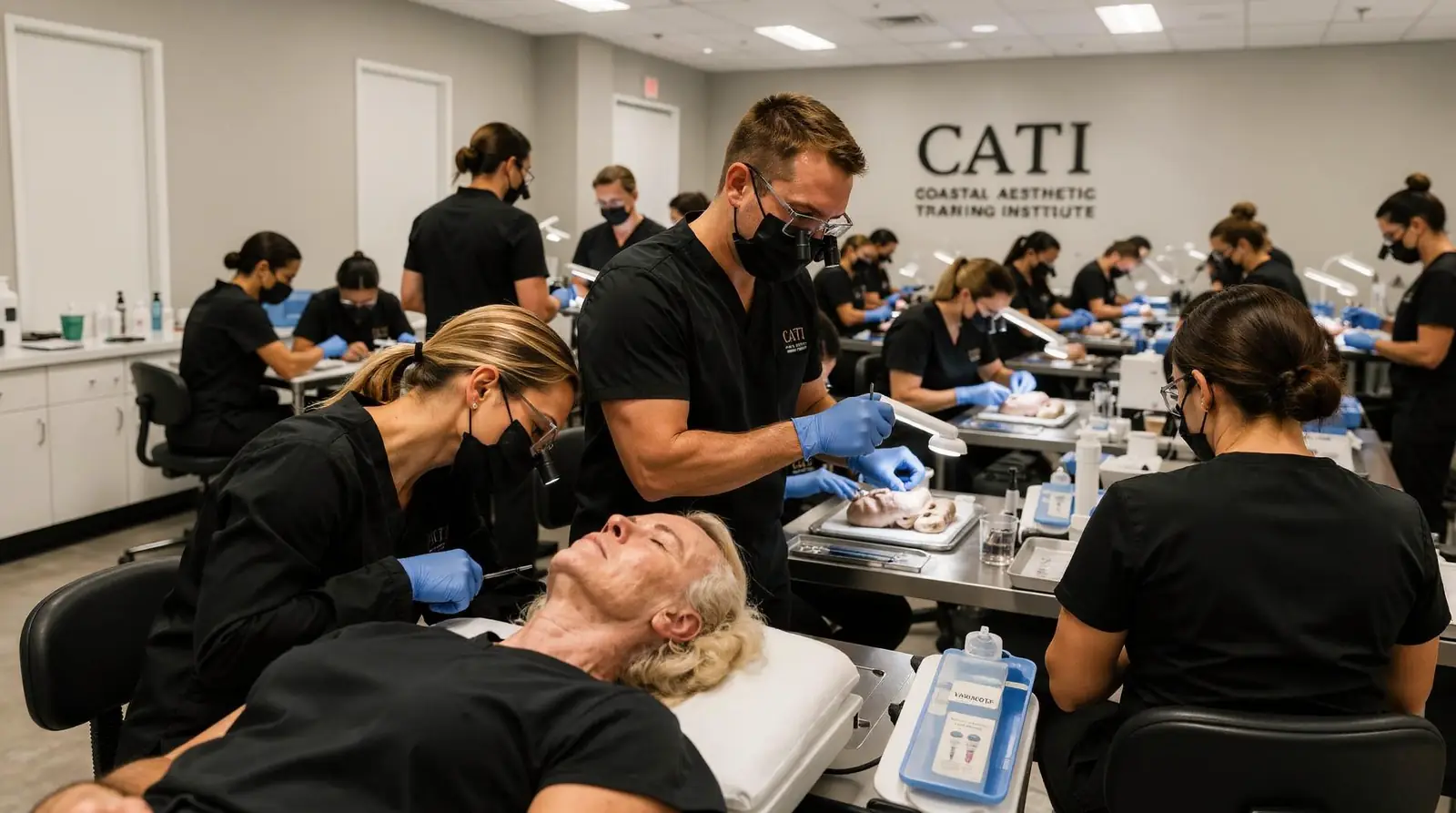
Advanced technique training expands your injectable skill set beyond basic wrinkle correction into complex, high-precision treatment planning. Advanced filler training for healthcare providers builds directly on the foundational injectable skills you already use, layering in sophisticated combination protocols and the nuanced artistry that separates expert-level injectors from average providers. If your practice still relies on single-product, single-area treatments, you’re leaving both revenue and patient results on the table.
Your curriculum should push past a single product category. You’ll work across multiple hyaluronic acid formulations, including Juvederm and Restylane. Each product carries distinct rheology and is suited to different aesthetic goals. cite-3 Knowing which filler to reach for, and why, is what turns a technician into a true injection specialist.
What advanced applications should the training include?
Strong programs move you into neurotoxin techniques that go far beyond glabellar lines. Expect hands-on coverage of:
- Micro-Botox for skin texture and pore refinement
- Nefertiti neck elevator technique for jawline and neck contouring
- Masseter reduction for jaw slimming and bruxism relief
- Combination filler-and-toxin protocols for full-face balancing
Why does hands-on practice matter more than lecture time?
Reading about anatomy won’t build your muscle memory. You need repetition, guided by someone who’s already made the mistakes you’re trying to avoid. Practicing on live models under expert instructor supervision builds the kind of practical confidence that slides and textbooks simply cannot replicate. cite-3
That live-model component matters most in advanced-level work, where injection depth, angle, and product selection carry higher stakes. Skip this step, and you risk transferring theoretical knowledge into clinical practice with dangerous gaps. Choose a program that pairs advanced curriculum content with real, supervised injection time—not just updated slide decks.
Why Choose Cadaver-Based Filler Training?
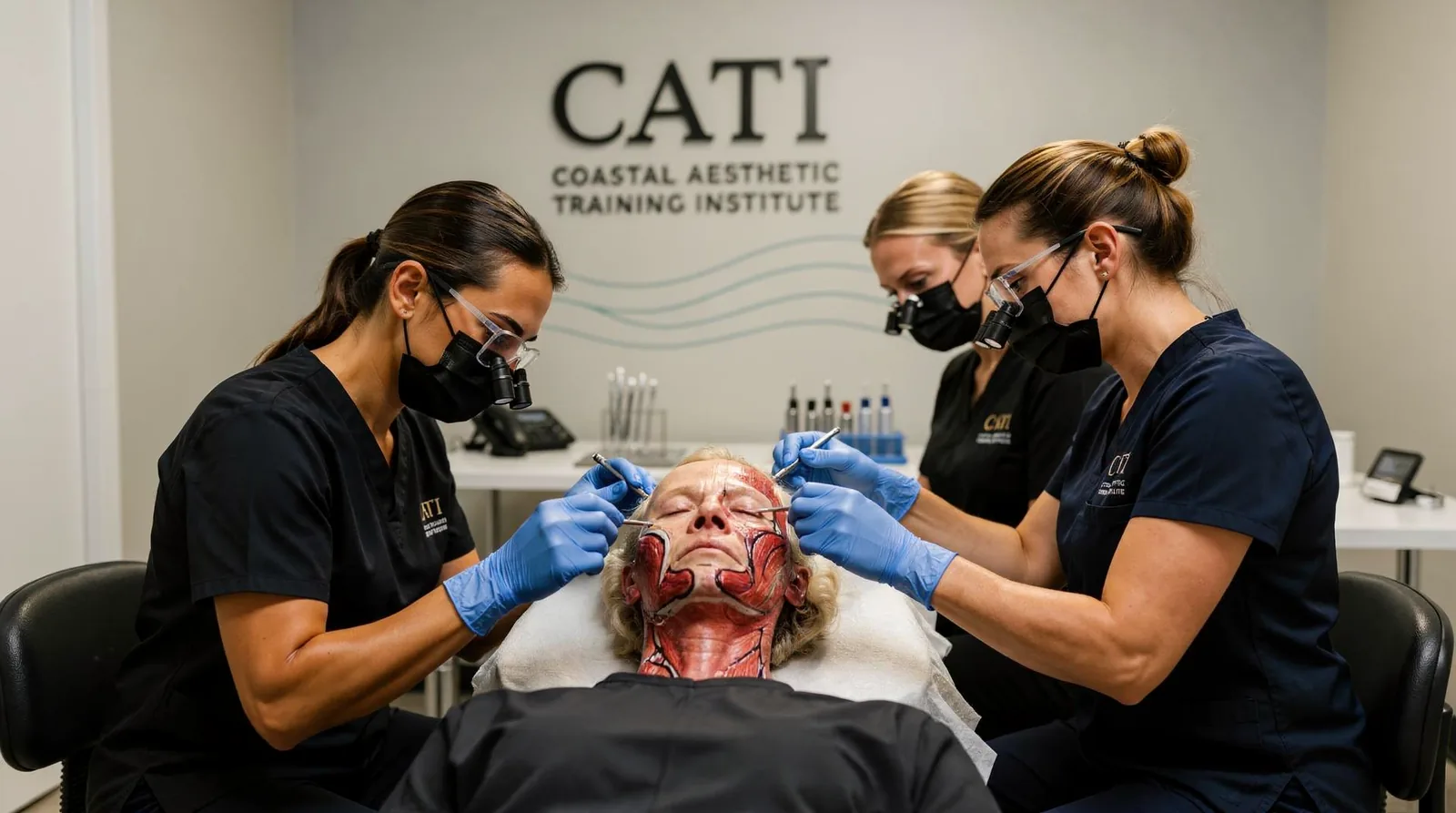
Cadaver-based filler training gives licensed providers direct access to real anatomical structures that no diagram or simulation model can replicate. Standard training courses often lean on models, illustrations, or virtual simulations. These tools have their place, but they can’t capture the true complexity of a human face. Muscle layers overlap in unpredictable ways. Vascular pathways shift from patient to patient. Only direct engagement with cadaver specimens shows you how these structures actually behave beneath the skin.
This distinction matters most when you’re pursuing advanced filler training for healthcare providers ready to move past basic injection protocols. Working with real specimens builds a working knowledge of facial anatomy, muscle layering, and vascular anatomy that diagrams simply can’t teach. You start to see how anatomical variation between patients changes your injection strategy, your risk assessment, and your technique selection.
Who benefits from cadaver-based training?
RNs, PAs, NPs, and physicians at any career stage gain value from this format. Whether you’re refining foundational skills or advancing into more complex procedures like midface volumization or jawline contouring, dissection-based learning meets you where you are. The training is built around real anatomy and evidence-based practice, not marketing shortcuts.
What do you actually gain from dissection-based learning?
You develop a deeper appreciation for how much anatomy varies from one patient to the next. That awareness translates directly into safer injection decisions in your practice.
Consider what separates cadaver-based instruction from conventional formats:
- Real tissue response — see how filler interacts with actual muscle and vascular layers
- Anatomical variation exposure — understand differences you won’t find in a textbook
- Risk-pattern recognition — identify vascular danger zones before you ever inject a live patient
- Career-stage flexibility — applicable whether you’re refining basics or tackling advanced techniques
How Do Small Class Sizes Improve Skill?
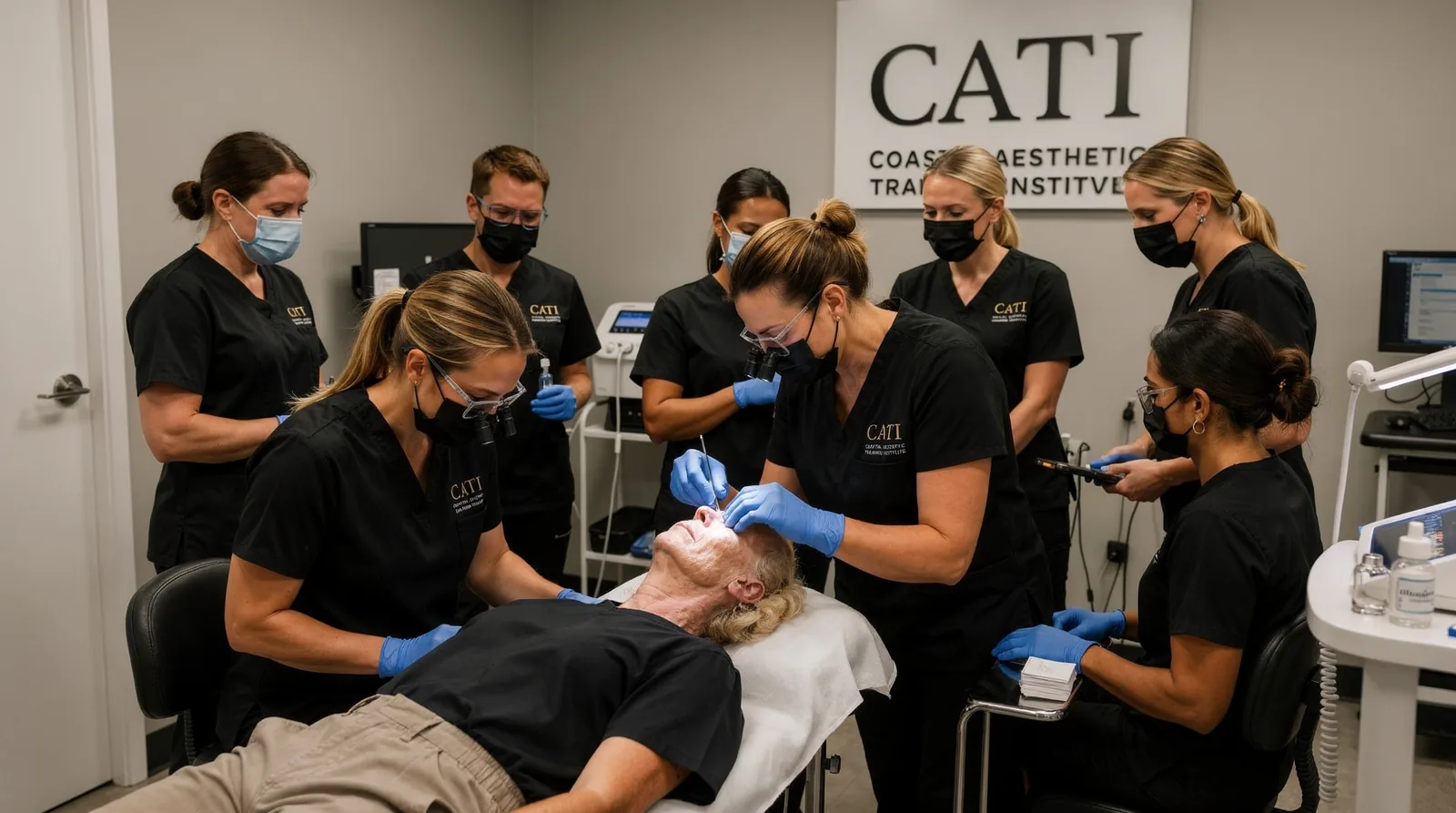
Fewer than 10 participants per session means every injector gets direct, individualized correction instead of watching from the back of a crowded room. That ratio drives faster skill acquisition and stronger retention when you’re learning complex filler techniques. Larger cohorts dilute instructor attention; small ones concentrate it exactly where you need it.
Programs built for licensed nurses, nurse practitioners, PAs, physicians, and dentists pair extensive didactic content with hands-on practice, and Meet Our Expert Instructors: The Qualifications Behind Our Botox and Filler Trai. This structure matters for advanced filler training for healthcare providers, where nuanced technique separates competent injectors from exceptional ones. You’re not just watching a lecture slide—you’re getting corrected mid-injection, in real time.
Why does one-on-one guidance matter for advanced filler work?
Complex cases—deep structural volumization, midface correction, combination biostimulator protocols—carry higher risk than basic lip or nasolabial fold treatments. Practicing on live models under direct instructor supervision lets you build confidence before you attempt these techniques independently on patients. Mistakes get caught and corrected on the spot, not after a complication develops in your own practice.
What does small-group instruction add that self-study can’t?
Evidence-based, small-group formats combine live clinical training with structured treatment-planning discussion. This pairing sharpens judgment, not just injection mechanics. You learn to assess anatomy, select the right product, and plan sessions with the same rigor your instructors apply.
Small class sizes also deliver benefits beyond the injection itself:
- Peer networking: You build relationships with other advancing practitioners facing similar practice-growth decisions.
- Faster feedback loops: Instructors catch technique errors before they become habits.
- Confidence under supervision: You attempt harder techniques in a controlled setting first.
For practice owners, that translates into staff who return ready to perform advanced procedures safely and consistently.
What Comes After Advanced Filler Certification?
Certification marks a starting point, not a finish line, for injectors moving into complex work. Skipping the next step costs you: providers who stop at basic competency plateau in technique while patients seek out practitioners who keep advancing. Advanced filler training for healthcare providers exists precisely to close that gap, giving licensed clinicians a structured path beyond entry-level skills.
CME-accredited advanced courses target experienced injectors specifically, focusing on mastering complex injection strategies rather than reviewing fundamentals. These programs assume baseline competency and push further into combination treatments and higher-risk anatomical zones. Many training providers also structure their coursework. It counts toward continuing medical education requirements, letting you build advanced skill while satisfying licensure obligations simultaneously.
Is cadaver training worth it after certification?
Yes. Cadaver-based instruction sharpens clinical confidence and injection accuracy for medical professionals at every career stage, not just beginners. cite-2 Working with real tissue exposes vascular structures and anatomical variation that live-model training cannot fully replicate.
Where should you train next?
Coastal Aesthetic Training Institute, based in Mystic, CT, delivers evidence-based education built for professionals advancing into these complex procedures. Your next move should include:
- Advanced injection technique courses focused on complication management
- Cadaver lab sessions for anatomical precision
- CME-eligible programs that satisfy licensure requirements
- Ongoing mentorship to refine judgment on complex cases
Choosing the right progression path protects your patients and your practice’s reputation.
Advanced dermal filler training represents a pivotal investment in your professional competency and patient outcomes. At Coastal Aesthetic Training Institute in Mystic, Connecticut, we remain committed to delivering evidence-based education that transforms practitioners into confident, skilled injectors. By mastering anatomical precision and advanced techniques under expert mentorship, you establish yourself as a trusted aesthetic provider capable of delivering natural-looking results with unwavering attention to safety. Your commitment to comprehensive training today directly elevates the standard of care you provide tomorrow.
FAQ
What does the Advanced Botox and Dermal Fillers Level II course include?
The course provides 8.0 AMA PRA Category 1 Credits for CME requirements, designed for nurses, physicians, physician assistants, nurse practitioners, and dentists.
Who is eligible for advanced dermal filler training at Coastal Aesthetic Training Institute?
RNs, NPs, physicians, physician assistants, and dentists train in small groups of fewer than 10 participants at the Mystic, Connecticut location.
What skills does advanced filler training build beyond basic injection technique?
Training expands into complex layering, correction, and combination protocols using multiple hyaluronic acid formulations, including Juvederm and Restylane, rather than single-product treatments.