On: August 17, 2026
Botox Training Courses for Medical Professionals: Coastal Guide
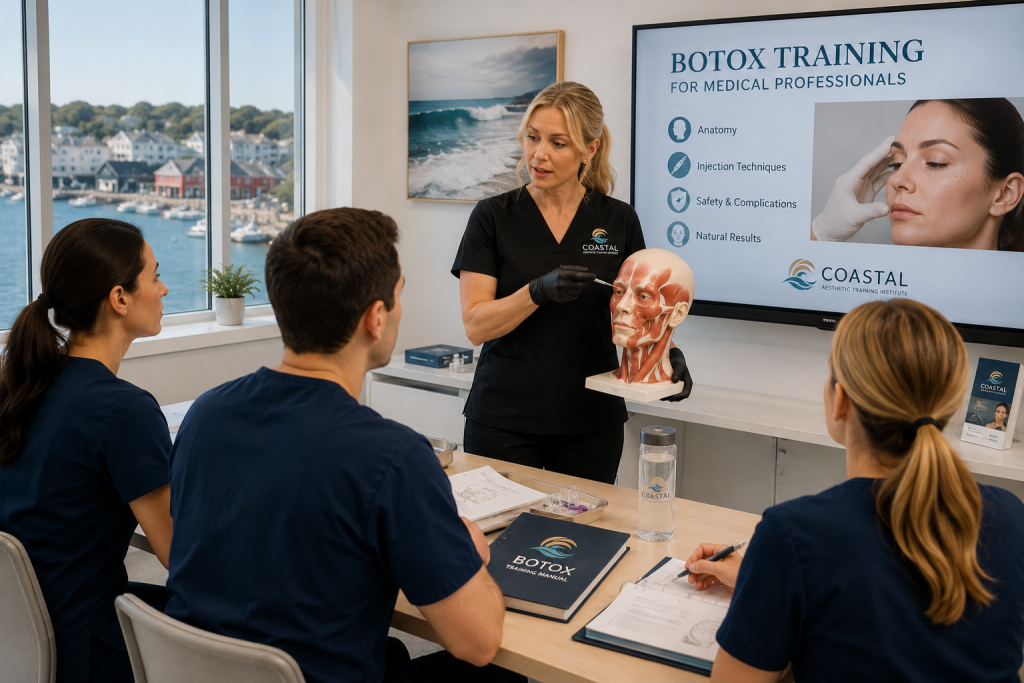
When it comes to Botox Training Courses for Medical Professionals, coastal Aesthetic Training Institute delivers hands-on Botox certification for RNs, NPs, PAs, physicians, and dentists to enhance their injectable services in resort and tourist-driven markets. Small class sizes in Mystic, CT, pair live-patient injection practice with cadaver-based anatomy training, giving you evidence-based technique, safety protocols, and confidence to launch precise, natural-looking Botox treatments in your coastal practice.
Key Takeaways: Aesthetic Training Essentials
- Botox ranks as the #1 nonsurgical cosmetic treatment with over 6 million procedures performed annually nationwide.
- Coastal Aesthetic Training Institute operates in Mystic, Connecticut, serving medical professionals in coastal regions.
- Training programs offer flexible formats including in-person hands-on practice with live patients and remote learning options.
- CME-accredited courses feature small-group instruction with five or fewer participants per session for personalized education.
Why Are Coastal Markets Fueling Botox Demand?
Coastal towns and resort communities generate year-round demand for injectables that inland practices rarely see. Vacationers, brides, and seasonal residents want camera-ready skin before the next event, and Botox delivers that fast. Since receiving FDA approval for cosmetic use, Botox has grown into one of the most requested aesthetic treatments worldwide, and coastal clientele expect their providers to offer it. cite-1
You’re stepping into a market with real momentum behind it. The U.S. Bureau of Labor Statistics projects demand for skin care specialists, including those offering injectables, to grow a notable share over the coming decade. cite-2 Nationally, Botox already holds the top spot among nonsurgical cosmetic treatments, with more than 6 million procedures performed in a single recent year. Coastal and tourist-heavy markets capture an outsized share of that volume because clients often travel specifically for aesthetic services tied to vacations and destination events.
Why Do Resort Towns See Higher Injectable Demand?
Resort towns attract clients who prioritize their appearance for weddings, reunions, and vacation photos. That seasonal urgency pushes demand higher than in typical suburban markets, creating steady opportunity for licensed providers who act early.
Is New England a Strong Market for Botox Providers?
Yes. Coastal Aesthetic Training Institute operates from Mystic, CT, placing you near New England’s coastal and resort communities where injectable demand keeps climbing. Completing Botox training courses for medical professionals near this region positions you to serve clients before competitors fill that gap.
Delaying certification costs you something real: patients, revenue, and the first-mover advantage in a market that rewards speed.
What Should A Certification Course Actually Teach?
Strong Botox Training Courses for Medical Professionals teach three foundations: the science behind neuromodulators, precise injection technique, and how to deliver results that look natural rather than frozen. Skip any of these three, and you walk away with a certificate but not real competence. Patients notice the difference immediately.
Understanding the underlying pharmacology matters as much as the needle work. Botox acts by temporarily paralyzing targeted facial muscles, which relaxes existing wrinkles and blocks new ones from forming. cite-1 Once you grasp that mechanism, you can predict how dosing and placement affect outcomes across different muscle groups and facial structures.
How much hands-on practice should a course include?
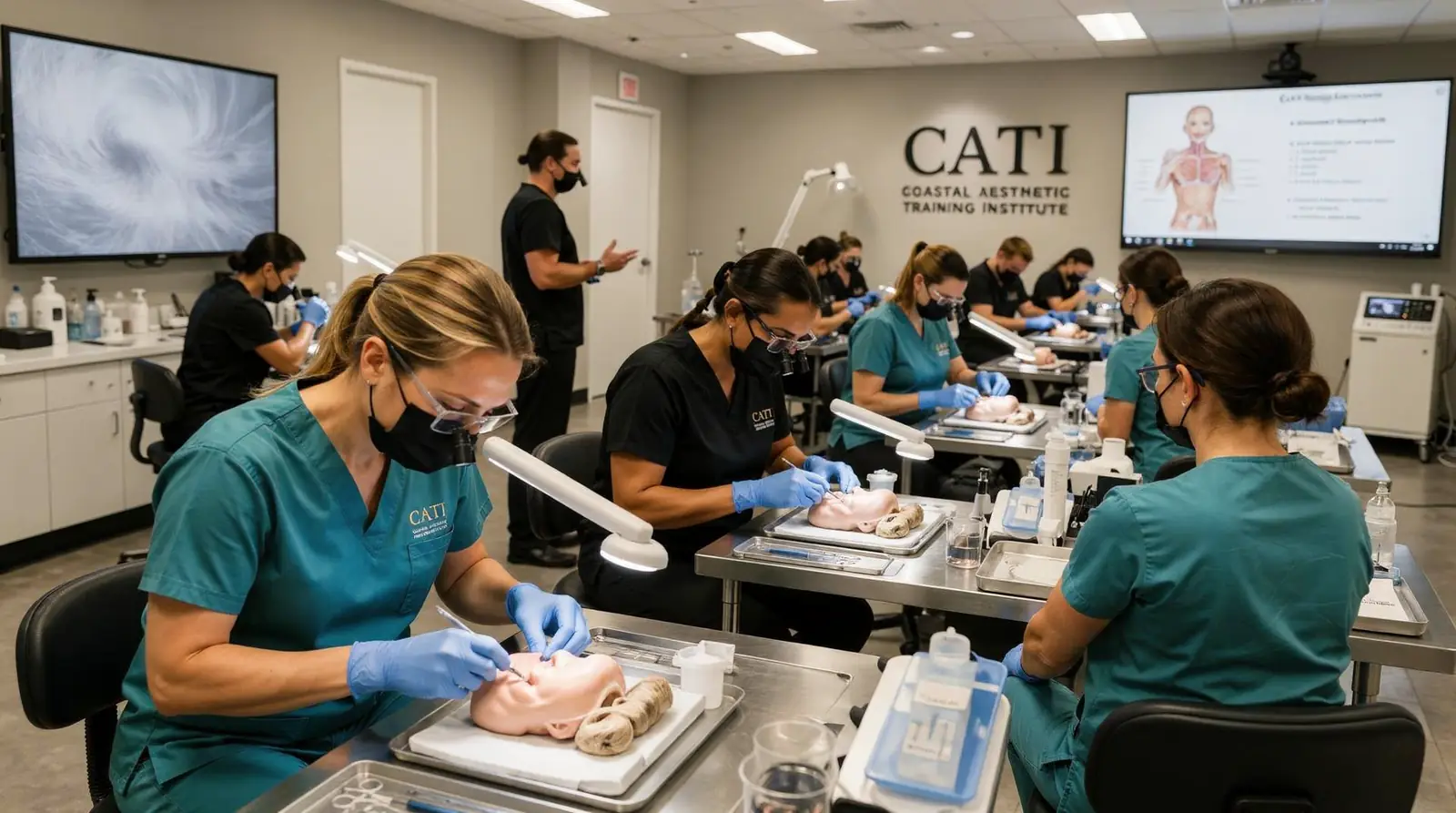
Look for programs built around live-patient injection, not slide decks and mannequins. Direct faculty supervision during that practice gives you real-time correction on angle, depth, and dosage before you ever touch a paying patient in your own practice.
Does class size actually affect training quality?
Yes — smaller groups translate directly into more feedback per attendee. A cohort of roughly 8 to 12 participants is a reasonable benchmark for rigorous, hands-on instruction. It keeps instructor attention on your technique instead of spreading it thin across a lecture hall.
Before enrolling, measure any program against this checklist:
- Curriculum depth: Does it cover mechanism of action, facial anatomy, and technique together?
- Supervision ratio: Will faculty watch and correct your injections directly?
- Group size: Does the course cap attendance for individualized coaching?
- Outcome focus: Does training emphasize natural-looking results, not just volume of injections?
A course missing even one of these elements leaves gaps that show up later. In complications, in inconsistent results, and in patients who don’t come back.
How Does Cadaver Training Improve Injection Safety?
Cadaver training closes the gap between textbook anatomy and the living face you inject every week. Real specimens reveal muscle depth, vascular branching, and tissue layering that no mannequin can reproduce. Models, diagrams, and simulation tools remain useful teaching aids, but none of them capture the true complexity of human anatomy the way a cadaver does.
Botox Training Courses for Medical Professionals built around cadaver labs give you direct contact with anatomical structures instead of approximations. You feel tissue resistance, trace nerve pathways, and locate vessels exactly where they sit in a real patient. That tactile knowledge translates directly into steadier hands and smarter injection decisions once you’re back in your own treatment room.
Why does anatomy-based training matter for RNs, NPs, PAs, and MDs?
Every license type benefits from seeing the anatomy firsthand rather than relying on illustrations alone. Whether you’re refining basic technique or advancing toward more complex procedures, immersive cadaver work builds evidence-based confidence you can apply immediately with patients.
What specifically do you learn from cadaver specimens?
Working directly with cadaver tissue sharpens your understanding of the structures that matter most during injection:
- Facial musculature — how muscle layers interact and influence product placement
- Vascular pathways — where major vessels run, so you inject with greater precision and avoid complications
- Tissue planes — the depth and texture differences between skin, fat, and muscle layers
This real-world exposure sharpens your judgment in ways slides and simulations cannot match. You leave the lab understanding not just where to inject. Why that placement protects the patient and produces a safer, more predictable result.
Which Licenses Qualify You For Injectable Training?
Five licensure categories qualify medical professionals for Botox training courses for medical professionals: physicians, registered nurses, nurse practitioners, physician assistants, and dentists. Federal and state law classify Botox and dermal fillers as medical treatments. Only licensed clinicians can legally administer them to clients. Skipping this credentialing step doesn’t just risk a fine — it puts your license and your patients at risk.
Coastal Aesthetic Training Institute accepts the following credentials for enrollment:
- Physician (MD or DO)
- Registered Nurse (RN)
- Nurse Practitioner (NP)
- Physician Assistant (PA)
- Dentist (DDS or DMD)
Does CME accreditation matter for a Botox certification course?
Yes. Courses approved for prescribed CME credit through recognized medical academies carry more weight with licensing boards and employers. That accreditation signals that the curriculum meets a documented clinical standard, not just a marketing checklist. You should confirm CME status before enrolling, especially if your state board requires continuing education hours for scope-of-practice compliance.
Can I advance beyond basic technique with these licenses?
Absolutely. Programs designed for RNs, PAs, NPs, and MDs let you refine foundational skills or progress into more complex procedures, depending on your starting point. Coastal Aesthetic Training Institute structures its curriculum around real anatomy and evidence-based practice. Your license type determines your entry point, not your ceiling. A physician and a nurse practitioner can sit in the same room and leave with different, appropriately scaled skill sets.
How Do You Launch Injectables In A Resort Market?
Launching injectables in a resort market starts with rigorous, hands-on Botox training courses for medical professionals paired with dermal filler certification built for real client demand. Skip that foundation and you risk uneven results in a market where reputations spread fast among seasonal visitors and returning clients alike.
The numbers explain why fillers deserve equal attention alongside neuromodulators. An estimated 3,410,730 soft tissue filler injections took place across the United States, and that figure keeps climbing. Resort clients arrive expecting both wrinkle-relaxing treatment and volume restoration, so your skill set needs to cover both.
What Should Filler Training Actually Include?
Strong programs walk you through multiple hyaluronic acid formulations, including Juvederm and Restylane. Each product behaves differently, and knowing which one fits a client’s facial structure, budget, and aesthetic goal separates a competent injector from an exceptional one.
How Do You Build Confidence Before Treating Clients?
Confidence comes from repetition, not theory. Training that puts you in front of live models, working under an expert instructor’s direct feedback, prepares you to handle real anatomy variation before you ever treat a paying client in your new market.
Location matters too. Coastal Aesthetic Training Institute operates from Mystic, CT, giving practitioners serving shoreline towns, resort destinations, and tourist-heavy corridors a training partner that understands that client base. Consider these launch priorities:
- Master neuromodulator injection alongside filler technique
- Learn multiple filler products, not just one brand
- Practice on live models before treating paying clients
- Choose instructors with direct aesthetic medicine experience
Build the skill first. The client base will follow.
Coastal Aesthetic Training Institute stands as a premier destination for medical professionals seeking to advance their expertise in aesthetic injections and neuromodulator techniques. Through evidence-based curriculum, expert mentorship, and hands-on clinical experience, CATI equips practitioners with the anatomical knowledge and procedural precision necessary to deliver exceptional patient outcomes. By choosing comprehensive, safety-focused training grounded in industry standards, medical professionals invest in their practice’s credibility and their patients’ confidence in aesthetic treatments.
FAQ
Why is coastal Botox certification worth pursuing now?
Coastal and resort markets see outsized injectable demand from clients preparing for weddings, vacations, and destination events, rewarding providers who certify early with first-mover advantage over competitors.
What does Coastal Aesthetic Training Institute’s course format look like?
Training features small-group instruction with five or fewer participants, combining live-patient injection practice, cadaver-based anatomy training, and flexible in-person or remote learning options, all CME-accredited.
What core skills does a strong Botox certification course teach?
Solid courses cover neuromodulator pharmacology, precise injection technique, and achieving natural-looking results. Botox works by temporarily paralyzing targeted facial muscles to relax and prevent wrinkles.